 |
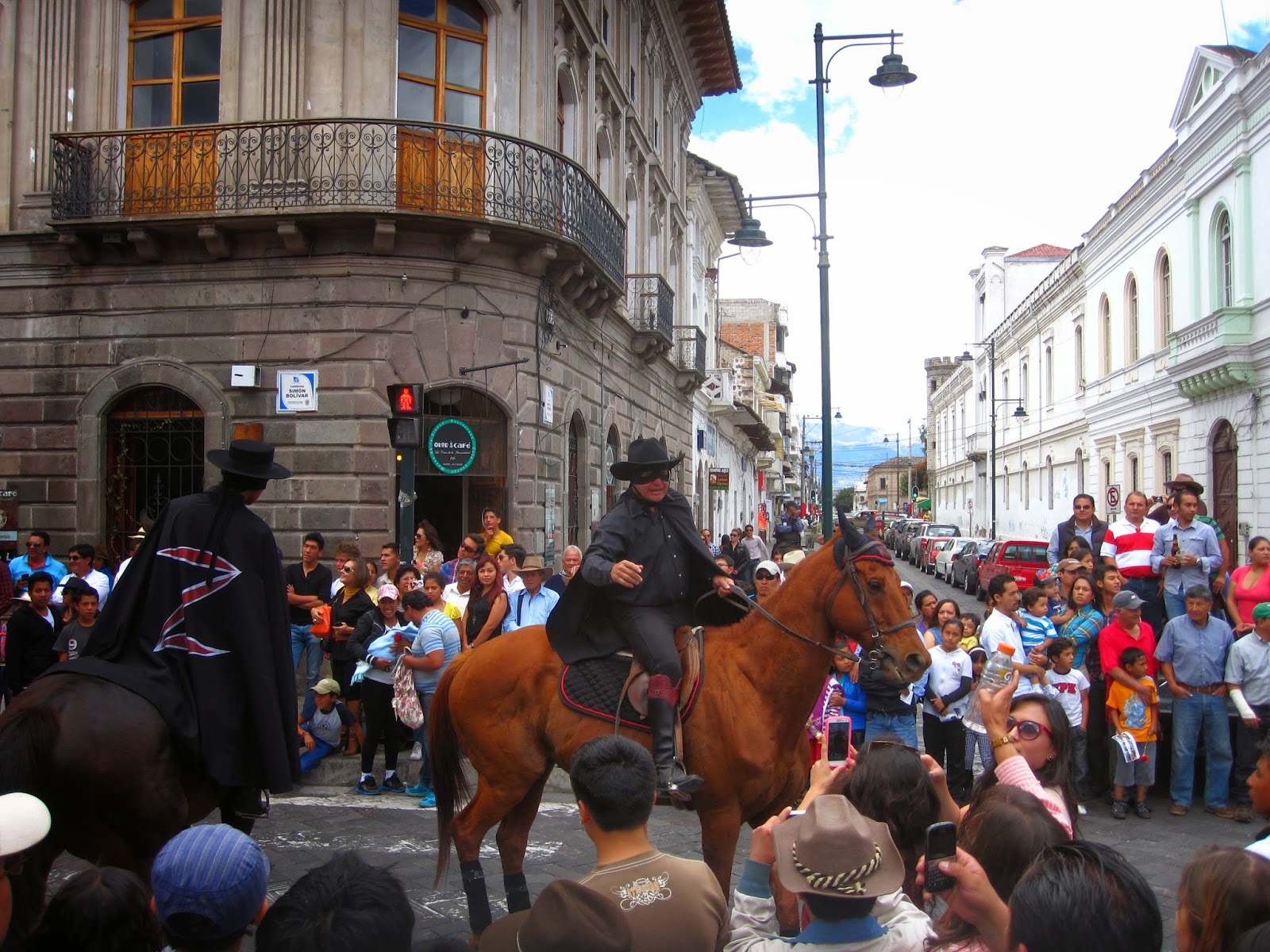
| Zapata! |
I awoke to the sound of my alarm ringing at 4:30 AM. The crickets had gone to sleep several hours ago and the birds had not yet woken. There was one person out there, somewhere, awake, and I had an appointment with him: Ingeniero Zapata.
My blue Mazda pickup rolled off the highway onto the driveway to the M.T.O.P. encampment. Gravel crunched and popped under the tires as I came to a stop before a large corrugated steel gate. I got out of the pickup and walked up to the gate. "Buenos Días," I shouted. A hatch to the left of the gate slid open and I heard a voice from somewhere int he darkness. "What do you want?" I walked closer to the hatch and peered inside, trying to get a glimpse of the courtyard. I could see a small number of workers crossing beneath a large mango tree, while a paved drive led to a large hangar, probably a garage. When the workers began for the day, which they soon would, they would roll out in 16 dump trucks, four Komatsu hydraulic shovels and a number of ministry pickups with the M.T.O.P. logo painted on the sides. They would climb to their positions in the mountains and resume excavation to make room for the expansion of the panamericana to four lanes. They reminded me of the ants taking apart the cement fixings of our house, working constantly and leaving rubble piles at their work sites. Unlike the men, the ants also did us the favor of removing dead cockroaches and food scraps. I turned my attention back to the voice beyond the hatch. "I'm here to see Zapata. I heard he'd be here at this time," I said.
"Who are you?" the voice responded.
"My name is Bartels," and I added "I live here," in case they were feeling neighbourly.
"What do you want?"
"I would like to speak with the chief engineer about receiving some of the rocks excavated during your works. Is that engineer Zapata?"
"Yes."
The hatch slid shut. I waited, hugging my down vest tight around my torso. A few seconds later the hatch opened.
"What do you want?"
"Are you engineer Zapata?"
"Yes."
"You're the chief engineer?"
"Yes."
He had a yellow helmet. Everyone else had a white helmet.
"I would like to know if it would be possible to receive from the excavation works a dump-truck or two full of rocks, for use in the foundations of a house I'm building."
Zapata looked at me through the hatch. In the dim light I couldn't make out his features.
"I can't give you any material without permission from the director of the M.T.O.P."
"Where is the M.T.O.P. director located?"
"At the M.T.O.P. headquarters, in Ibarra."
I had Zapata draw me a map, then I thanked him and returned home. The birds had woken up for their morning concert and I wouldn't be returning to sleep any time soon. I put on a kettle for coffee and heated up a breakfast of tomato de árbol and banana in oatmeal with granola.
The M.T.O.P. is a gated complex on the main road through Ibarra, leading south to Quito in one direction and north to Tulcán and the border with Colombia in the other direction. I drove past the ministry complex twice before realising it was there. The security guard at the gate, after learning I was there to see the director, waved us through with the colloquial "Siga." The first building past the gates on the left-hand side is a tiny guard house with no door. All of the buildings in the complex surround the parking lot, which extends back until it bends and is out of sight. The office next to the guard house was plastered with cement, per the norm here, and a large triangular wedge had fallen away, exposing the the rough, light-grey concrete wall. Following the office, a large bathroom facility showed no outer damage. Further down the left-hand side of the parking lot a large hangar, corrugated roof held aloft by several steel pylons, housed two large dump-trucks and a small backhoe. The hangar juts into the parking lot, blocking further view. To the right-hand side past the entrance to the complex is an empty building. What I imagined would one day be window frames were no more than several holes in the far wall, clearly visible through the collapsed near well. Naked rebar stuck out from concrete columns and floors like grass growing on an undisturbed field. The next building into the complex on this side caught my attention. A stone and mortar wall protected the outside of an outdoor staircase. I parked and the security guard wandered over to the pickup. He asked for a more detailed version of my business there. I explained the discussion with Zapata and he gestured to the rear of the parking lot. "You want the building in back," he said, returning to his post. I went as far back as the hangar before realising that all of the buildings beyond looked the same to me. I stopped and asked a a man working on one of the dump trucks where the director's office was. "You mean the directora, engineer Sofía Franco?" He pointed to the metal-framed glass doorway next to the staircase with the stone wall, back towards the entrance. "You want that building up front."
Inside the building where the directora presumedly resided during working hours a young woman greeted me. "Are you engineer Sofía Franco?" I asked. "No," she replied, "I'm her secretary." As I was introducing myself another man entered and began speaking with her. She asked me to take a seat in the chairs in an alcove by the entrance. A man and a woman had already sat in two of the chairs and had to stand up to let me by as I stepped up into the alcove. When I sat my knees were almost touching the man's knees. All of us waited silently in the uncomfortably close intimacy of that alcove. After five minutes the secretary approached and motioned me to her desk. I explained the situation with Zapata.
"What do you need the material for?"
"I need about two dump trucks of stones and three of clay-filled earth, if that would be possible, for a natural house in Chota."
"In Chota? Ah, that part of the road is under the jurisdiction of the provincial M.T.O.P. of Carchi, in Tulcán."
Tulcán is two hours from Chota by car.
"Ingeniero Zapata told me to come here for the directora's permission."
"Ah, maybe, but the excavation there is part of the road works done by the Carchi M.T.O.P."
"Look, I live on the old panamericana, just past the Ambuquí toll both. It's still the province of Imbabura there."
"You have to go to Tulcán; we can't give you permission here."
"The land where I'm building is 5 km further from Ibarra than the excavation works. To build there I had to get permission from the government administration here in Ibarra, not from Carchi... and Ingeniero Zapata was clear that he receives orders from you all, at this ministry in Ibarra."
She held my gaze.
"The ministry can't just give away materials to any individual who comes and asks for them."
"I'm not asking for much, and I'll pay the full cost of transport, including gasoline."
"What you're asking for is not possible."
"Please, could I speak with the directora?"
She glanced away and then back at me.
"Are you part of an organisation or something?"
"Yes," I replied immediately, "I'm a volunteer with an NGO here in Ibarra. This house project is related to my work with them. We work with indigenous communities, with the blind community of Imbabura, and with... uh... what's the word for people who are in jail?"
"Prisoner?"
"Uh, so maybe ex-prisoner capacitation."
The conversation had moved outside my prepared speech and my Spanish vocabulary was barely up to the task.
"One moment."
The secretary entered the room she had glanced at earlier. Above the door was a placard with the words "Ingeniera Sofía Franco." After a moment she reappeared.
"Go ahead, the directora will see you now."
The directora, from behind her desk, was chatting with a man slouching on the couch. I introduced myself. The directress pulled her glossy lips into a big smile. "I'm Sofía," she said. "Your project is an interesting. What can we do to help?" I began to explain. When I arrived at Zapata, the man on the couch pulled out his cellphone and dialled a number. I shifted my explanation to the work done by the NGO. Sofía was nodding along with what I was saying.
"Zapata," the man on the couch spoke into his cellphone, "did two gringos come by this morning?"
Sofía and I turned to regard him.
"What did he ask for?"
There was a pause as Zapata responded on the other end of the line.
"That's all? That's not a problem, give it to him."
Sofía smiled at me.
"You can go pick up the material now," this time the man spoke to me as he pocketed the cellphone.
"Thank you very much," I said, "though Zapata said I need the director's," I looked at Sofía, "or the directora's permission."
They both laughed.
"This is the head engineer of the province," Sofía explained while gesturing to the man. "He's like the boss of Zapata."
I nodded.
"All the same, could I have your number just in case he forgets this call?"
They both laughed, the head engineer especially loudly. I wondered if Zapata had a reputation, or I were busy making one for myself. Sofía consented and we exchanged numbers. I thanked them both, we all shook hands and I left the office. On the way out I resumed a conversation I had been having with the secretary about obtaining straw bales. After promising to contact a neighbour of hers she had seen baling barley straw she suggested we exchange numbers. Another round of thanks and handshakes and I left the ministry.
Back in the pickup I thought about how Sofía said she was 28, and the secretary looked in her thirties, and how Sofía was made up with lipstick and eyeliner. I remembered what Pablo had said. 'Jamie, Correa has removed all the heads of public ministries and agencies from office. And he replaced them with attractive young women straight out of university. And now? Good luck getting anything done if it involves the government."




 Posts


